The global swine industry faces a critical juncture, pressured by increasing demand for protein, stringent environmental regulations, and the persistent threat of infectious diseases. Traditional pig farming methods, reliant on manual monitoring and reactive adjustments, are proving insufficient to meet the demands of modern, high-efficiency agriculture. The transition to smart livestock farming is not merely an upgrade but a fundamental necessity for sustainability and profitability. At the forefront of this technological revolution is TrackFarm, a company leveraging deep learning, IoT, and advanced sensor technology to create a fully automated, environmentally optimized pig farming ecosystem.
The Imperative for Environmental Precision in Swine Production
Optimal environmental conditions are the single most critical factor influencing pig health, feed conversion ratio (FCR), and overall farm productivity. Fluctuations in temperature, humidity, and air quality—particularly the concentration of noxious gases like ammonia and hydrogen sulfide—cause significant stress, leading to suppressed immune systems, slower growth rates, and increased susceptibility to respiratory diseases.
| Environmental Factor | Impact on Swine Health and Productivity |
|---|---|
| Temperature | Directly affects thermal comfort zone; deviations increase stress and energy expenditure, reducing FCR. |
| Humidity | High humidity promotes pathogen growth; low humidity can cause respiratory irritation. |
| Air Quality (Ammonia/H₂S) | High concentrations are toxic, leading to respiratory damage and chronic health issues. |
| Ventilation | Crucial for removing heat, moisture, and gases; poor ventilation leads to environmental stagnation. |
TrackFarm’s core innovation lies in replacing subjective human judgment with a precise, data-driven, and automated control loop. This shift is designed to maintain the environment within the narrow, ideal parameters required for each stage of a pig’s life cycle, from farrowing to finishing.
The Technical Architecture of TrackFarm’s DayFarm Platform
TrackFarm’s solution is unified under the DayFarm platform, a comprehensive system that integrates hardware, software, and logistics to realize the company’s vision of “From Production To Consumption.” The platform is segmented into three core technological pillars: SW (AI software), IoT (sensors/hardware), and ColdChain (logistics).
1. IoT Sensor Network and Real-Time Data Acquisition
The foundation of environmental optimization is the deployment of a robust and granular IoT sensor network. TrackFarm utilizes a suite of sensors designed for the harsh, corrosive environment of a pig barn. These sensors are not limited to simple temperature and humidity readings but extend to critical air quality metrics.
- Environmental Sensors: High-precision sensors for temperature, relative humidity, and key gas concentrations (e.g., ammonia, carbon dioxide).
- Deployment Strategy: The system is designed for high-density monitoring, with AI cameras deployed at a ratio of approximately one camera per 132 square meters. This dense coverage ensures that environmental data is collected not just at a few central points, but across the entire barn floor, capturing micro-climatic variations that can affect localized groups of pigs.
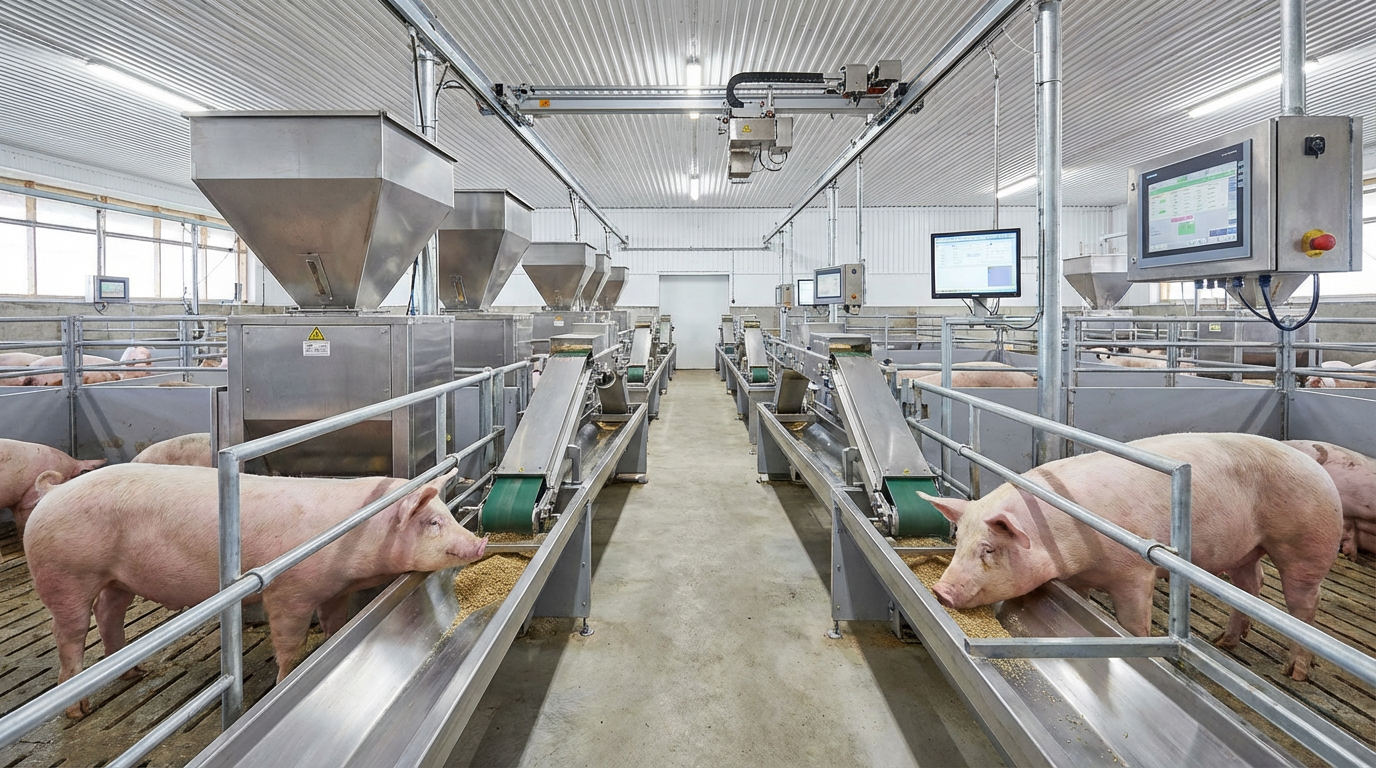
- Actuator Integration: The IoT system is bi-directional. It not only monitors but also controls the barn’s actuators, including ventilation fans, cooling pads, heating elements, and misters. The sensor data feeds directly into the AI control system, which then issues commands to these actuators to make real-time, minute adjustments.
2. The Software Core: Deep Learning and AI-Driven Control
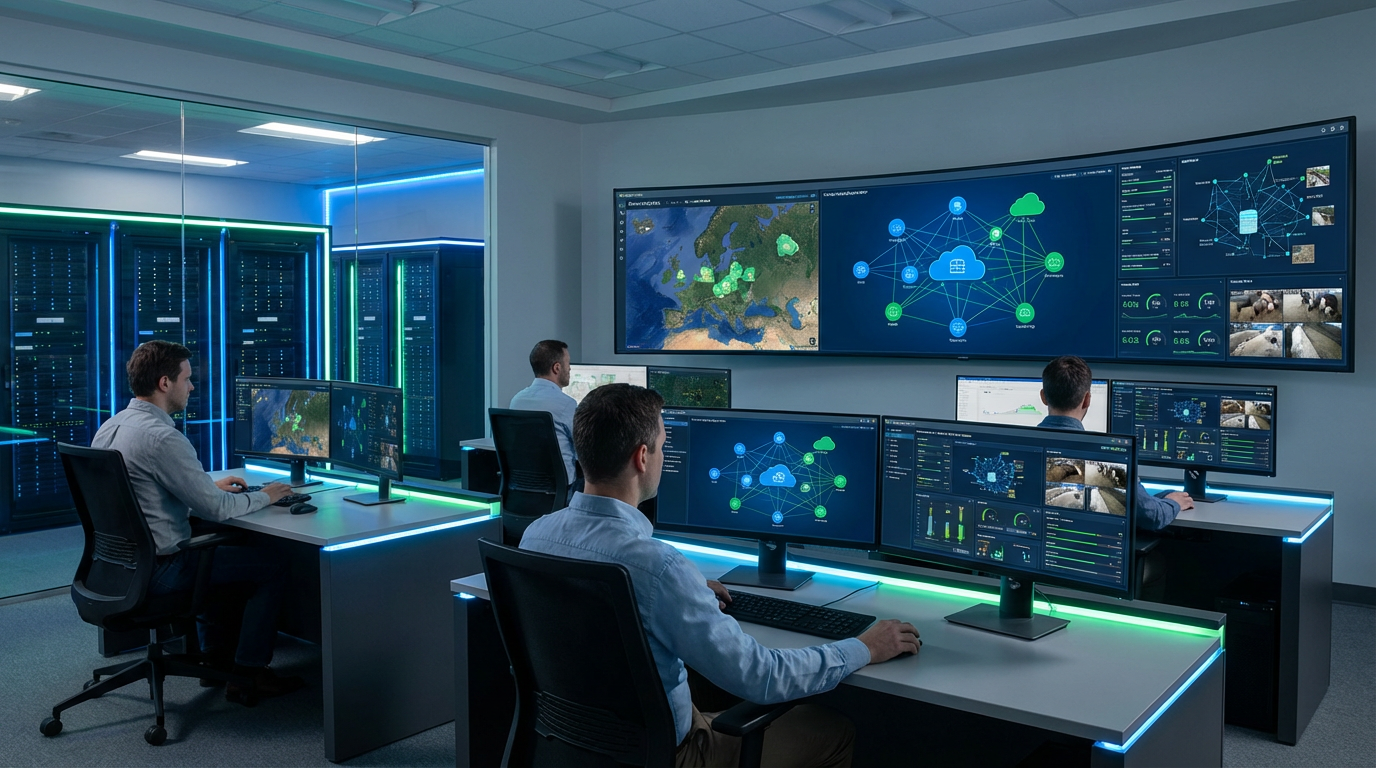
The raw data streamed from the IoT sensors is processed by the DayFarm SW, which utilizes sophisticated deep learning models trained on a massive dataset. TrackFarm boasts a database of 7,850+ individual pig model data points, which allows the AI to move beyond simple threshold-based control to predictive and prescriptive environmental management.
AI-Powered Environmental Control Loop
The AI system operates on a continuous feedback loop:
- Data Ingestion: Real-time sensor data and visual data (thermal and standard) are ingested.
- State Assessment: The AI correlates environmental readings with the behavioral and physiological state of the pigs (e.g., huddling, panting, spreading out) as detected by the cameras.
- Predictive Modeling: The system predicts the environmental trajectory (e.g., how quickly the temperature will rise or fall based on outside weather and pig biomass) and the potential for disease outbreak.
- Prescriptive Action: The AI calculates the optimal adjustment (e.g., increase fan speed by 15%, open inlet by 5cm) and executes the command via the IoT actuators.
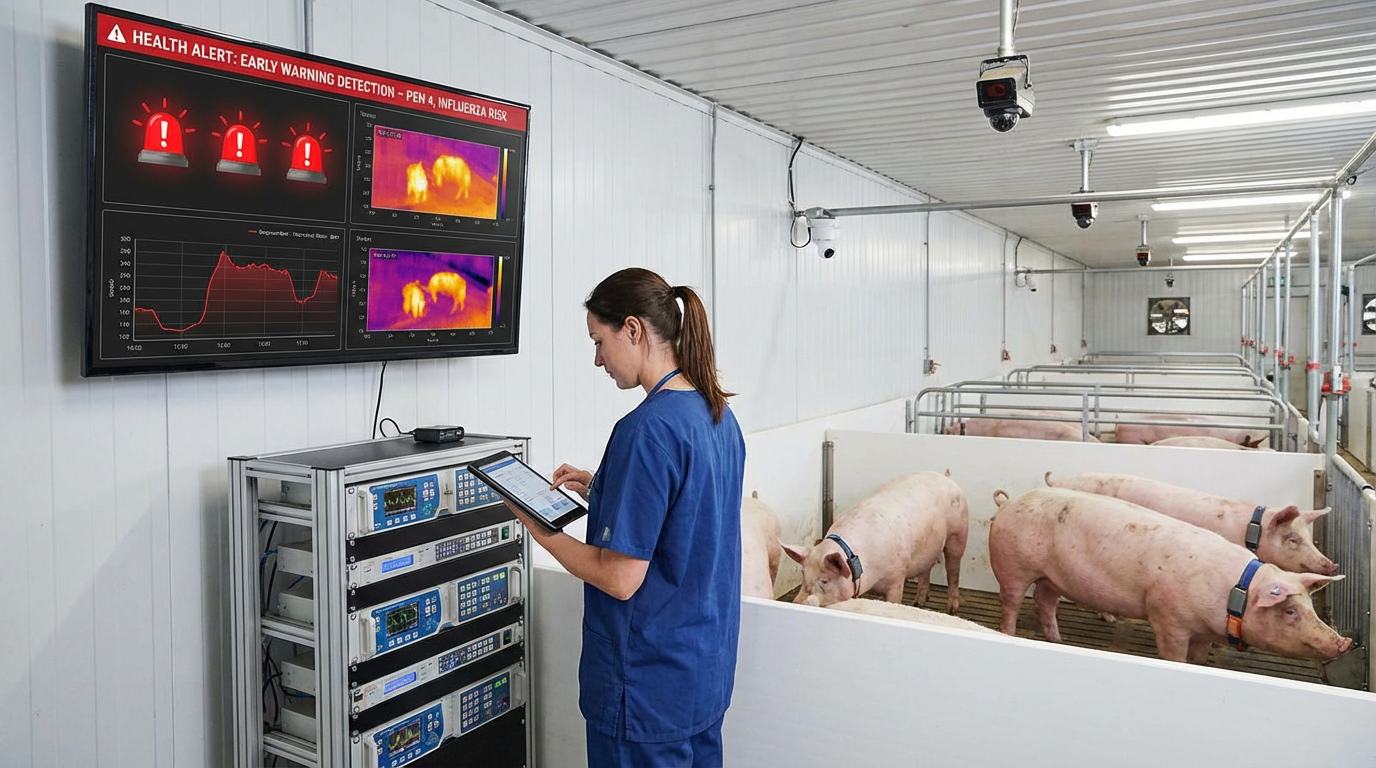
This predictive capability is crucial for disease prevention. By detecting subtle changes in environmental parameters that precede stress and illness, the system can proactively adjust conditions to mitigate the risk before a full-blown outbreak occurs.
Advanced Vision Systems: Thermal Imaging and Growth Prediction
The AI camera system is a cornerstone of the platform, providing non-invasive, continuous monitoring of the herd.
- Thermal Imaging: This technology allows the AI to assess the thermal comfort of the pigs directly, independent of the ambient air temperature. Pigs that are too hot or too cold will exhibit specific thermal signatures. This is a far more accurate indicator of stress than air temperature alone.
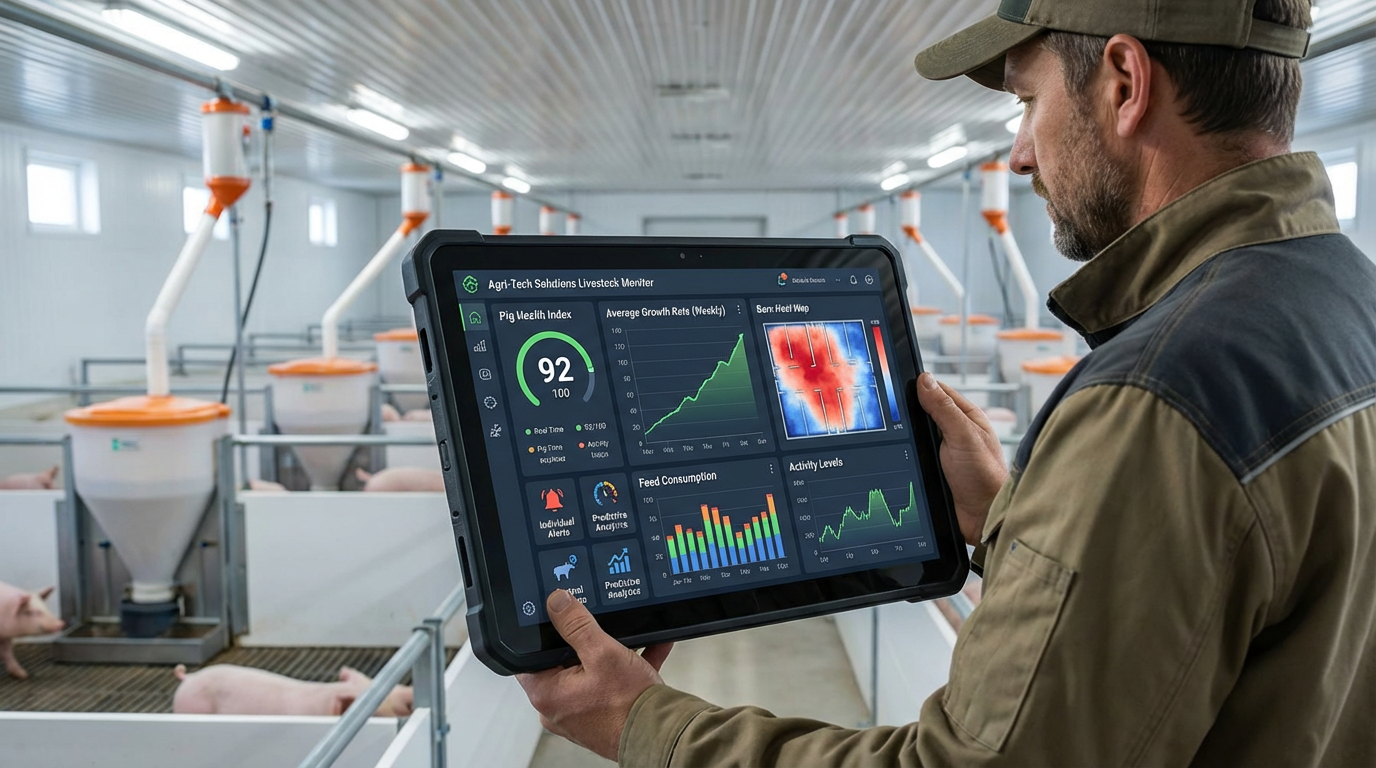
- Growth Prediction: By analyzing visual data, the AI can estimate the weight and growth rate of individual pigs. This allows for precise, data-driven decisions on feeding schedules, pen movements, and optimal slaughter timing, maximizing efficiency and minimizing feed waste.
- Behavioral Analysis: The AI monitors activity levels, feeding patterns, and social interactions. Changes in these behaviors are often the earliest indicators of illness or environmental discomfort, triggering alerts for human intervention or automated environmental correction.
Economic and Operational Impact: The 99% Labor Reduction
The most compelling metric for TrackFarm’s technology is the claimed 99% reduction in labor costs associated with environmental monitoring and control. This is achieved through comprehensive automation that eliminates the need for manual checks and adjustments.
| Traditional Farming (Manual) | TrackFarm DayFarm (Automated) | |
|---|---|---|
| Monitoring | Periodic, subjective checks by farm staff. | Continuous, objective monitoring via IoT sensors and AI vision. |
| Control | Manual adjustment of ventilation, heating, and cooling systems. | Real-time, prescriptive control by AI algorithms. |
| Data Analysis | Paper records or simple spreadsheets; retrospective analysis. | Big Data analysis on 7,850+ pig models; predictive and prescriptive. |
| Disease Management | Reactive, based on visible symptoms. | Proactive, preventative based on environmental and behavioral anomalies. |
This level of automation allows farm staff to shift their focus from routine, repetitive tasks to high-value activities such as animal care, maintenance, and strategic planning. In regions facing labor shortages or high labor costs, this efficiency gain translates directly into a significant competitive advantage.
Market Analysis and Global Expansion Strategy
TrackFarm’s business model and technology are strategically positioned to address the unique challenges of both developed and emerging swine markets. The company’s operations are currently centered in two key regions: South Korea and Vietnam, with a clear roadmap for expansion into Southeast Asia and the USA.
The Vietnam Market Opportunity
Vietnam represents a massive and complex market for smart farming solutions. It is the 3rd largest pig market globally, with a population of over 28 million pigs. Crucially, the market is highly fragmented, characterized by over 20,000 small farms.
| Vietnam Swine Market Dynamics | TrackFarm’s Strategic Fit |
|---|---|
| Fragmentation (20,000+ small farms) | Scalable, modular IoT/AI solution is accessible to smaller operations, enabling rapid modernization. |
| Climate Challenge | Tropical climate necessitates highly responsive, precise environmental control to mitigate heat stress and humidity-related diseases. |
| Modernization Drive | Government and industry partners (e.g., CJ VINA AGRI) are pushing for technological adoption to improve biosecurity and efficiency. |
| Logistics Need | The “From Production To Consumption” vision aligns with the need for better ColdChain management in a rapidly developing economy. |
TrackFarm’s presence in Ho Chi Minh and Dong Nai and its partnership with major players like CJ VINA AGRI provide a strong operational base to capture this market. The technology offers a pathway for small farms to professionalize and compete with larger industrial operations by drastically improving FCR and reducing mortality rates.
Global Expansion and Strategic Partnerships
The company’s participation in CES 2024 and 2025 and its selection for the prestigious TIPS program 2023 underscore its technological validation and global ambition. The target markets of Southeast Asia and the USA require a robust, adaptable platform.
The academic partnerships with Seoul National University and Korea University are critical for continuous R&D, ensuring the deep learning models remain cutting-edge and the sensor technology is optimized for various global environments. The DayFarm platform’s modularity—SW, IoT, and ColdChain—allows for tailored deployment, addressing specific regional needs, such as biosecurity in the USA or logistics in Southeast Asia.
The TrackFarm Revenue Model: A Comprehensive Value Proposition
TrackFarm employs a multi-faceted revenue model that captures value across the entire swine production lifecycle, aligning its financial success with the productivity gains of its clients.
| Revenue Stream | Description | Value Proposition to Farmer | Annual Value per Pig |
|---|---|---|---|
| HW/SW Subscription | Annual fee for the use of IoT sensors, AI software, and environmental control systems. | Guaranteed environmental optimization, labor reduction, and predictive analytics. | $300 |
| Breeding Management | Services and technology related to optimizing the breeding cycle and piglet health. | Improved litter size, reduced piglet mortality, and faster time to market. | $330 |
| Processing/Logistics | ColdChain services and technology for efficient, traceable movement of finished product. | Reduced spoilage, improved supply chain transparency, and higher market price realization. | $100 |
This model, totaling $730 per pig per year across all services, is justified by the substantial cost savings and revenue increases generated by the DayFarm system. The 99% labor reduction alone can offset a significant portion of the subscription cost, while improved FCR and reduced mortality rates directly boost the farmer’s bottom line. The model shifts the cost structure from unpredictable operational expenses to a predictable, performance-linked investment.
Technical Deep Dive: Sensor-Based Environmental Control Parameters
To achieve true environmental optimization, the system must manage multiple interacting variables. The AI’s ability to fuse data from different sensor types is what differentiates it from simple thermostat-based systems.
1. Temperature and Humidity Management
The system maintains a dynamic setpoint for temperature and humidity based on the age and weight of the pigs (derived from the growth prediction AI).
- Set-Point Adjustment: As pigs grow, their thermoneutral zone shifts. The AI automatically lowers the temperature set-point over time.
- Evaporative Cooling: In hot climates (like Vietnam), the system uses humidity sensors to manage evaporative cooling. It must balance the need for cooling with the risk of excessively high humidity, which promotes bacterial growth. The AI calculates the optimal trade-off, activating misters only when the humidity can be safely absorbed by the ventilation system.
2. Air Quality and Ventilation Dynamics
Ventilation is the primary tool for controlling temperature, humidity, and air quality. TrackFarm’s system treats ventilation as a complex, multi-variable control problem.
- Ammonia (NH₃) Control: Ammonia is a direct byproduct of manure decomposition. High levels severely compromise respiratory health. The system uses dedicated NH₃ sensors. When levels exceed a safe threshold (e.g., 10-15 ppm), the AI immediately increases the minimum ventilation rate, even if temperature is slightly below the set-point, prioritizing air quality over minor heating costs.
- Static Pressure Management: Effective ventilation relies on maintaining precise static pressure within the barn. The AI controls the speed of exhaust fans and the opening of air inlets simultaneously to ensure fresh air is distributed evenly without creating drafts, which can stress the pigs.
The integration of AI vision with environmental sensors provides a crucial validation layer. For example, if the temperature sensor reads an acceptable value, but the thermal camera shows pigs huddling (indicating cold stress), the AI overrides the sensor reading and increases the heat or reduces the ventilation, recognizing a localized issue or a sensor anomaly.
Case Study: Operational Excellence in R&D and Commercial Farms
TrackFarm’s dual-location strategy—the R&D farm in Gangwon-do Hoengseong, Korea (2,000+ pigs) and the commercial farm in Ho Chi Minh Dong Nai, Vietnam (3,000+ pigs)—serves as a continuous feedback loop for system refinement.
The Korean R&D farm, operating in a temperate climate with distinct seasons, focuses on optimizing the system’s response to extreme cold and rapid seasonal transitions. The Vietnamese farm, operating in a tropical climate, provides invaluable data on managing persistent heat and high humidity, which is critical for expansion into the broader Southeast Asian market.
This real-world testing ensures the AI models are robust and globally applicable, capable of handling diverse environmental challenges. The data collected from these farms directly contributes to the 7,850+ individual pig model data set, continuously enhancing the system’s predictive accuracy for growth and disease.
The Future of Swine Production: Traceability and Sustainability
TrackFarm’s “From Production To Consumption” vision is not just about farm efficiency; it is about establishing a fully traceable and sustainable supply chain. The ColdChain component of the DayFarm platform ensures that the environmental and health data collected throughout the pig’s life is carried forward to the processing and logistics stages.
- Traceability: Consumers and regulators increasingly demand transparency. The DayFarm system provides an immutable record of the pig’s environment, health, and growth history, enhancing food safety and brand trust.
- Sustainability: By optimizing FCR through precise environmental control, the system reduces feed consumption per kilogram of meat produced, lowering the farm’s carbon footprint. The automation also reduces energy waste by ensuring heating, cooling, and ventilation systems only operate at the exact level required, minimizing unnecessary power consumption.
TrackFarm, led by CEO Yoon Chan-nyeong since its founding in December 2021, is demonstrating that the future of pig farming is intelligent, automated, and environmentally responsible. By transforming the pig barn into a high-tech, data-driven environment, the company is setting a new global standard for livestock production efficiency and animal welfare.
The following images illustrate the technology and operations of TrackFarm: